Aave is reshaping the DeFi economy. Six blockchains were the first to be affected

Aave is proposing to scale back operations on six blockchains at once. This is one of the most talked-about proposals from the Aave DAO in recent times.
Over the past few years, hundreds of millions of dollars have been invested in new blockchains. They were hailed as the future of the industry, competitors to Ethereum, and even “Solana killers.” Major venture capital firms backed their development, and the launch of each new network was met with sensational headlines.
But on July 30, a proposal was submitted to the Aave DAO that forces us to look at the situation from a completely different angle.
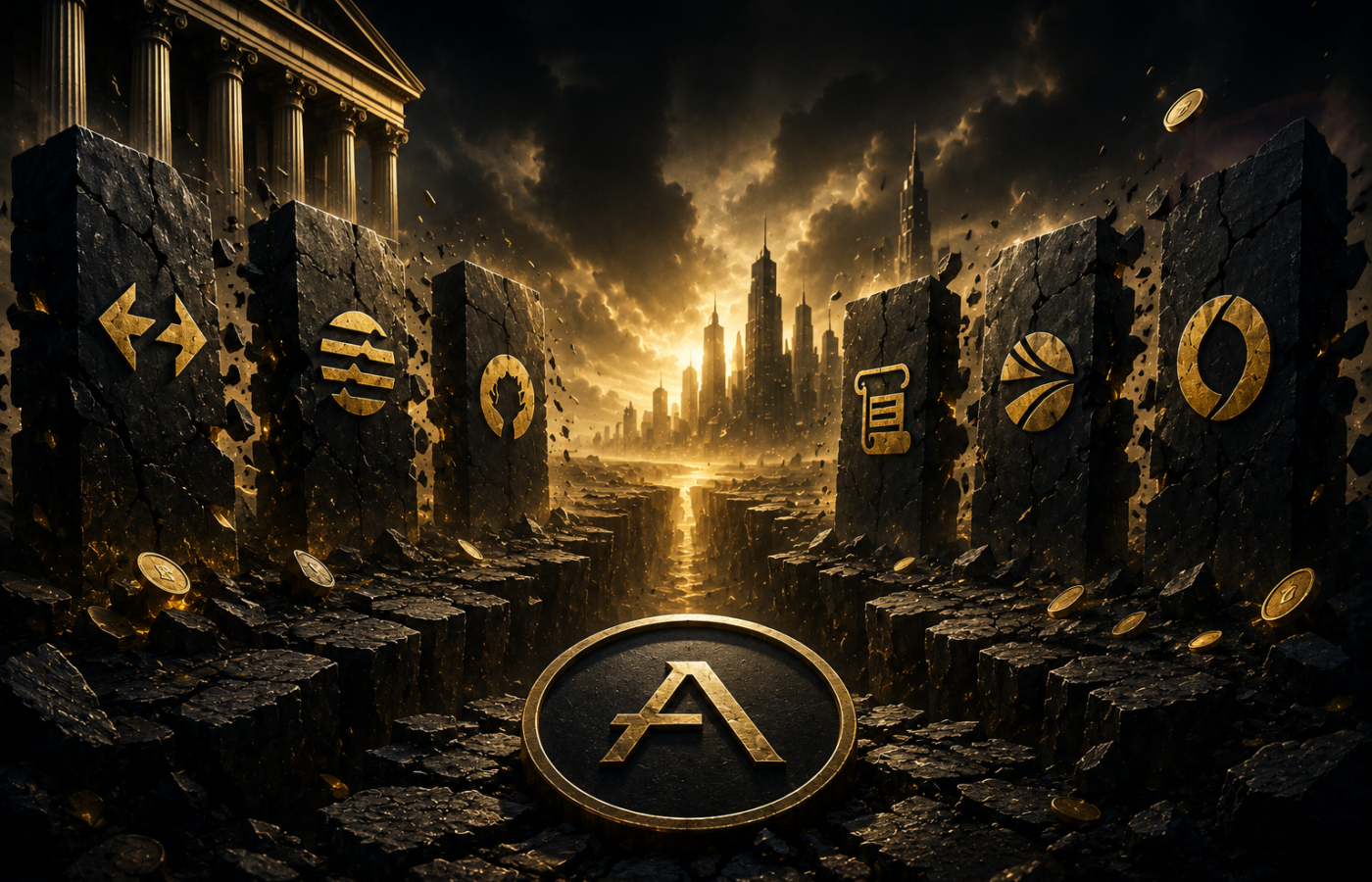
The largest DeFi protocol is proposing to phase out six of its deployments at once: Sonic, Scroll, zkSync, Metis, Soneium, and Aptos. The reason is simple: the costs of maintaining them no longer justify the economic return.
Sometimes a single table can tell you more about the market than hundreds of high-profile press releases.
There was money. But there was no economy.
| Blockchain | Public Funding | Aave TVL | Status |
|---|---|---|---|
| zkSync | $458 million | $0.8 million | It has been proposed to phase out |
| Aptos | $400 million | $1.7 million | It has been proposed to phase out |
| Metis | $109.6 million | $0.3 million | It has been proposed to phase out |
| Scroll | $80 million | $2.2 million | It has been proposed to phase out |
| Sonic | Fantom Rebranding | $7.6 million | It has been proposed to phase out |
| Soneium | Startale — $20 million in public funding | $0.2 million | It has been proposed to phase out |
Hundreds of millions of dollars have been invested in developing these ecosystems, but the largest DeFi lending protocol has since concluded that maintaining a presence on these networks is no longer economically viable.
This isn't about the death of blockchains
Aave does not claim that these networks are dead or useless.
The sentence actually means something completely different.
According to the Aave DAO proposal and the LlamaRisk risk framework, the evaluation of each deployment takes into account not only the amount of funds locked in the protocol but also the economic viability of continuing to support it. If the costs of maintaining a market—including oracle operations, risk parameter configuration, infrastructure support, and operational processes—begin to exceed its value to the ecosystem, that market may be proposed for shutdown.
In total, it is proposed to decommission 50 pools, 21 defunded Pendle PTs, and completely shut down Aave operations across six networks at once. Collectively , they hold approximately $12.8 million in collateral and $4.1 million in debt.
What does this tell us about the market?
For a long time, the crypto industry operated according to a simple formula:
New blockchain → major funding round → listing → expectations of massive growth.
But Aave's proposal shows that funding alone is not enough.
It is possible to raise hundreds of millions of dollars.
You can receive support from major foundations.
It's possible to build a huge community.
But when, a few years later, one of the biggest players in DeFi suggests pulling out of this market, you can’t help but wonder: what went wrong?
The story of Aptos is particularly telling in this regard.
In 2022, the project was regularly cited as one of Solana’s biggest “killers.” Former Meta engineers, the Move programming language, and nearly $400 million in investments made it one of the most anticipated launches of its time.
Several years later, Aave is considering the possibility of exiting this market.
It's not because the technology turned out to be bad.
Because the economics of its use did not live up to expectations.
Conclusion KLJOMPUS
Today, six blockchains were the subject of discussion.
This list may change tomorrow.
If Aave's proposal becomes the new norm, the main issue for any blockchain will no longer be the amount of investment raised or the number of high-profile partnerships.
The main question is whether it will still be economically attractive to the largest protocols in a few years.
For now, all we can do is watch.
Who's next?
Have the pyramids stopped working?
No way!